
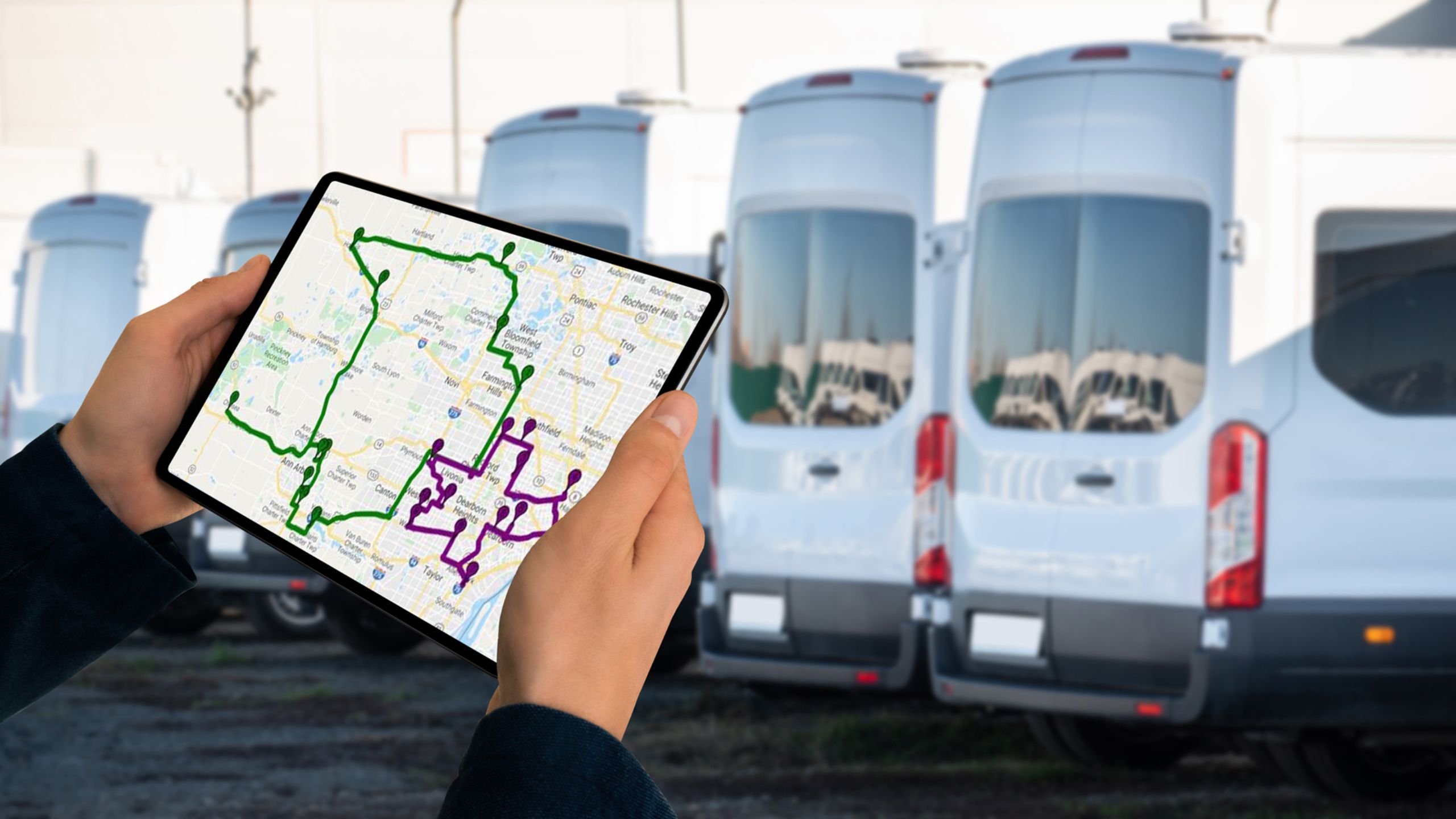
Street sweeping route planning isn’t about the shortest line on a map. It’s about reducing nightly operational waste—without creating routes that break the moment the real world shows up, like:
- Redundant passes and excess mileage
- Deadhead travel and missed segments
- Late route changes that trigger overtime and admin cleanup
The right route planning software acts as an operational control layer, helping dispatch plan, adjust, and verify routes so you can cover more ground with fewer miles and fewer headaches.
What is Street Sweeping Route Optimization?
Street sweeping route optimization is the process of reducing wasted miles and non-productive time by standardizing route sequence, adapting to real-world disruptions (blocked access, callouts, equipment issues), and verifying coverage. The goal isn’t perfect routing—it’s repeatable routing that reduces overlap, deadhead travel, and rework while improving audit-ready documentation.
In plain terms, it helps dispatch build routes that crews can run consistently—then proves what was serviced when questions, complaints, audits, or billing reviews come up.
Eagle Eye wasn’t built as a theory—it was built from decades of dispatch reality. Meet Mike Lucht, the founder who shaped Eagle Eye’s routing and verification philosophy from real operations.
Who Is This For
Municipalities / Public Works: Standardize service verification across routes and operators, respond to complaints with evidence, support audit readiness, and run consistent performance reviews using shared definitions of “excessive” and “in-scope.”
Contractors: Reduce deadhead and rework, stabilize shift length, protect margins, support invoice accuracy with route-linked proof, and cut overtime/admin cleanup caused by last-minute reroutes.
What Manual Routing Gets Wrong (And Why It Costs You)
Deadhead Travel (Non-Productive Miles)
Deadhead travel is the non-productive drive time between service zones, between stops, or back to the yard—miles that burn fuel without sweeping curb miles. It usually increases when routes aren’t sequenced tightly, when start/end points shift, or when dispatch has to improvise mid-shift. This is why deadhead reduction is one of the fastest ways to cut fuel and stabilize shift length.
Why it costs you: more fuel, more time, and less capacity for paid sweeping.
Redundant Passes (Overlapping Coverage)
Redundant passes happen when routes overlap streets/aisles because zones weren’t clearly defined, routes were copied week-to-week without rebalancing, or last-minute changes weren’t updated across the whole plan. Over time, “hidden overlap” becomes normal—until costs spike.
Why it costs you: wasted miles, inconsistent coverage, and disputes over what was actually serviced.
Route Collapse Nights (Late Changes That Trigger Overtime)
A “route collapse” night is when a workable plan falls apart due to real-world disruption—blocked access, staffing gaps, truck downtime, weather, missed notes, or unexpected add-ons. Without a structured way to adjust routes and communicate changes, small problems cascade, creating next-day admin cleanup.
Why it costs you: overtime, rework trips, and messy documentation that turns into complaint handling and billing friction.
The 3 Levers That Create Savings
Below is a practical, numbers-based breakdown using realistic ranges (not perfect-world promises). Use it as a configurable model for contractors and public works teams.
For municipalities and contractors, route planning matters even more when it includes route verification/proof of service—so you can confirm what was serviced, document exceptions, and answer complaints or billing questions with evidence instead of memory.
Example baseline: 10 street sweeping jobs (at-a-glance)
Here’s an illustrative baseline for 10 jobs, showing the percentage ranges for real miles and gallons. (Swap in your actual route length, MPG, and fuel cost for a client-specific estimate.)
|
Item |
Example value |
|
Jobs |
10 |
|
Avg miles per job |
24 miles |
|
Total miles (before) |
240 miles |
|
Example fuel economy (illustrative) |
6 mpg |
|
Estimated fuel used (before, illustrative) |
40 gallons |
|
Mileage reduction range (typical) |
5–12% |
|
Miles saved |
12–28.8 miles |
|
Fuel saved (at 6 mpg) |
2.0–4.8 gallons |
|
Fuel savings ($) 2.0–4.8 gal × $[fuel/gal] |
2.0–4.8 × $[fuel/gal] |
The above table is an illustrative example only. Actual miles, MPG, and savings vary by route density, service windows, disposal trips, parked cars/blocked access, and execution consistency.
A Practical Savings Model
Step 1: Estimate annual fuel savings
Fuel Savings ($) = Annual Fuel Spend × Fuel Reduction %
Example (configurable):
- Annual fuel spend: $120,000
- Fuel reduction: 3%–8%
- Estimated fuel savings: $3,600–$9,600/year
Step 2: Estimate labor/overtime savings from time reduction
Labor Savings ($) = Hours Saved × Loaded Hourly Cost
To estimate hours saved:
- Identify your non-productive time (deadhead + avoidable idle + inefficient sequencing)
- Apply a conservative reduction range (e.g., 6%–15%)
Example (configurable):
- Non-productive time across fleet: 20–40 hours/week
- Reduction: 6%–15%
- Hours saved: 1.2–6 hours/week
- Annual hours saved: ~62–312 hours/year
- Loaded labor cost: $30–$45/hour
- Estimated labor savings: $1,860–$14,040/year
You don’t have to claim “we cut overtime in half.” Finance teams prefer conservative ranges that can be validated in 30–60 days.
Step 3: Estimate capacity gain (the “growth” benefit)
Capacity is often the most important output for contractors: if you save time, you can add work without adding trucks.
Capacity Gain (jobs/routes) = Time saved per night ÷ Average time per job/segment
Even saving 10–20 minutes per route can create meaningful weekly capacity—especially when it reduces spillover overtime.
What Route Planning Software Should Do for Street Sweeping
Look for software that supports:
- Zone-based route sequencing with service constraints
- Quick edits and rebalancing when staffing/equipment changes
- Driver-ready dispatch (clear route order + notes)
- Coverage verification support (route verification/proof of service)
- Exception documentation (blocked access, missed segments with a reason)
- Performance reporting that highlights waste (repeated stops, idle patterns, slow segments, frequent reroutes)
The goal isn’t “perfect routing”—it’s repeatable routing that survives real-world disruption.
How to Validate Savings in the First 30 Days
To validate route optimization in a way operations and finance can trust, compare baseline weeks vs. optimized weeks using the same service zones, service windows, and equipment mix.
Track these 3 categories week over week:
1. Miles and routing efficiency
- Miles per route / per shift
- Deadhead miles (between zones / back to yard)
- Overlap indicators (repeat segments, backtracking
2. Non-productive time
- Total non-productive time per shift (deadhead + avoidable idle + delays)
- Off-job stop time (frequency and duration)
- Excessive idle patterns (where time accumulates)
3. Rework indicators
- Complaint-driven revisits
- Missed segments
- “Route collapse” nights requiring manual scramble
If miles and non-productive time trend down while rework indicators decline, you’re seeing real operational improvement—typically followed by fuel savings and more stable shift length.
FAQs
Q: What are the three levers that create savings in street sweeping routes?
A: Route planning software cuts fuel and time by tightening three things: route design (remove overlap), route execution (reduce deadhead/idle), and route adjustment (handle disruptions without chaos). These levers reduce redundant passes, late reroutes, and rework that burns fuel and capacity.
Q: What is deadhead travel in street sweeping?
A: Deadhead travel is long, non-productive drive time between zones, between stops, or back to the yard—miles that burn fuel without adding service value. Cutting deadhead is a core time lever because it reduces non-productive time and helps stabilize shift length when routes change mid-night.
Q: What causes redundant passes and excess mileage?
A: Redundant passes happen when streets/aisles overlap because routes weren’t optimized or weren’t updated after changes. Excess mileage often comes from inefficient sequencing between zones, properties, or curb lanes. Over time, “hidden overlap” compounds—especially when routes are copied week to week or split across dispatchers.
Q: What’s a realistic range for route-mile reduction?
A: A realistic, configurable range is 5%–12% reduction in route miles in operations with frequent overlap, mixed service areas, or changing requirements. Operations that are already highly standardized often see 2%–6%. Results depend on route density, zone design, yard location, and route-change frequency.
Q: What does “cuts fuel” actually mean in street sweeping?
A: Fuel savings typically come from a mix of fewer miles driven, fewer unnecessary passes, and less idle time while dispatch decisions are made. A realistic, configurable planning range is 3%–8% of annual fuel spend once route optimization and route-change workflows are used consistently across the fleet.
Q: How do you estimate savings without overclaiming?
A: Use conservative ranges and formulas that finance teams can validate. Example: Fuel Savings ($) = Annual Fuel Spend × Fuel Reduction % (using a realistic range like 3%–8%). Pair it with a time-based estimate that accounts for non-productive time reduction (6%–15%) and loaded labor costs.
Q: What should route planning software do in street sweeping?
A: Look for zone-based sequencing with constraints, quick edits and rebalancing, driver-ready dispatch (route order + notes), coverage verification support, exception documentation (blocked access, missed segments with a reason), and reporting that highlights waste (idle patterns, repeated stops, frequent reroutes).
Q: How do you validate route optimization savings in the first 30 days?
A: Track miles per route/shift, non-productive time per shift (deadhead + avoidable idle), and rework indicators (complaint-driven revisits, missed segments, “route collapse” nights). If those trends improve, fuel and labor savings typically follow.
Q: What is the capacity gain in a sweeping operation?
A: Capacity gain is the ability to add work without adding trucks. If you save time per night, you can fit more jobs/routes into the same shift. A simple model is Capacity Gain = Time saved per night ÷ Average time per job/segment.
Affiliations and Partners

Our network of satisfied clients strengthens our commitment to excellence.

Transform Your Sweeping Operations Now!
0 Comments