
Mike Lucht: The Practical Mind Behind Eagle Eye Tracking
Built by operators. Proven in the field. Continuously evolving. Eagle Eye Tracking wasn’t created in a boardroom—it was built in the real world, under real pressure, to solve real operational problems.

Mike Lucht, Founder & CEO, Eagle Eye Tracking
Mike Lucht, founder of Eagle Eye Tracking, started a demanding wheel-based service business in 1978. Back then, there were no spreadsheets, no scheduling platforms, and no modern tools to manage routes or recurring work. So he created a system that worked—starting with something as simple as a pegboard to manage routine service schedules.
That “figure it out and make it work” mindset became the foundation of what Eagle Eye is today.
From Pegboards to Software:
Why Eagle Eye Was Built
Eagle Eye Tracking began as an internal tool—not as a product for the market. Mike and his team built Eagle Eye because there wasn’t a solution that met their needs—especially not one that was integrated enough to support the complexity of dispatch work, changing job demands, and operational visibility.
As the business shifted from scheduled work to more on-demand, dispatch-driven operations, Eagle Eye evolved alongside it.
The Milestones That Shaped Eagle Eye Tracking
Eagle Eye’s journey is a story of adapting to technology shifts as they became available—and using them to solve real operational pain points.
Early 1980s: Computers Arrive
When computers became available, Mike hired a programmer and began building what would eventually become Eagle Eye Tracking.
1995: GPS Changed Everything
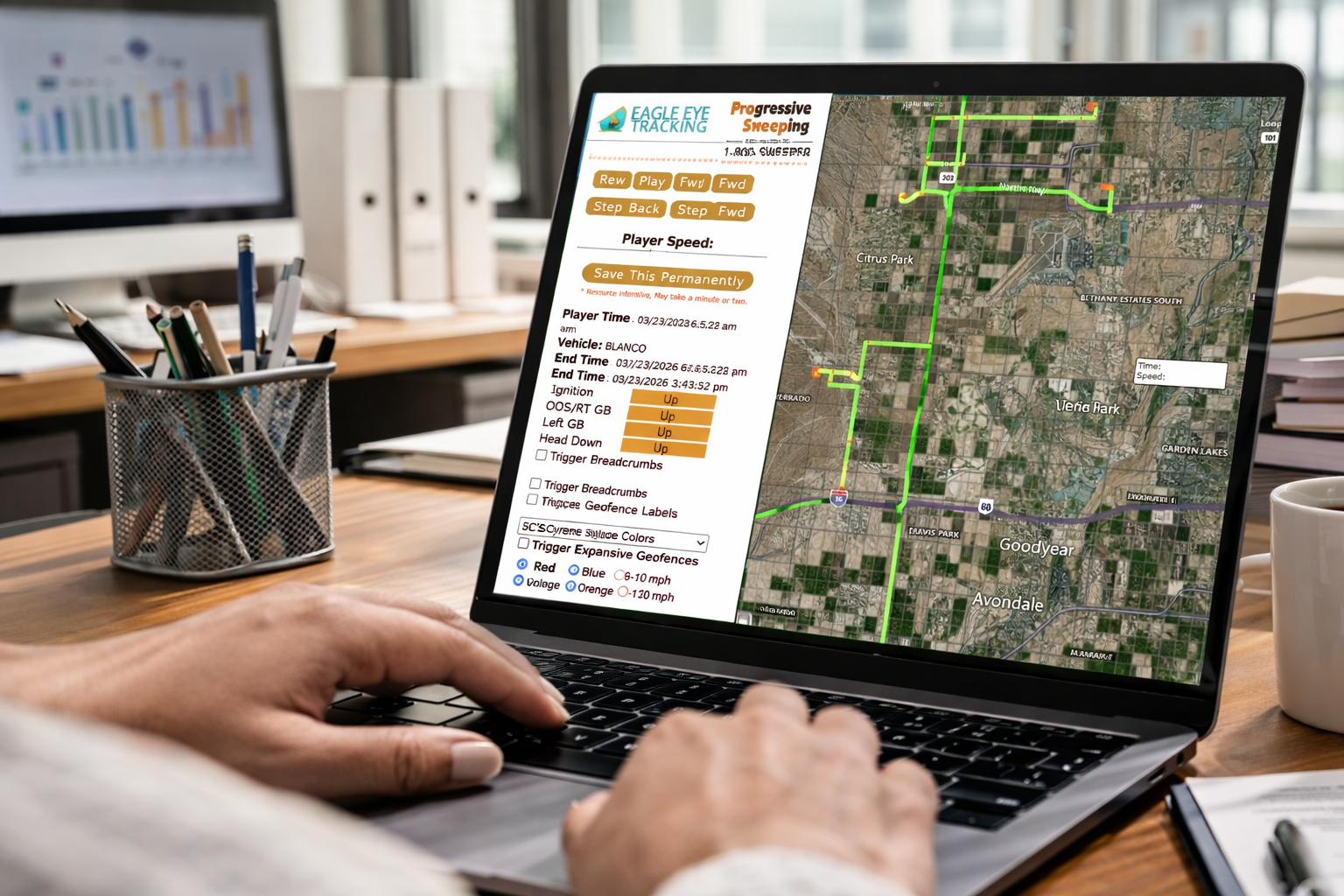
In the early 90s—around 1995—Mike discovered GPS vehicle tracking and integrated it into the desktop system. This unlocked a new level of visibility: where vehicles were, what they were doing, and how operations could be improved.
Early 2000s: The Cloud Became the Breakthrough
Before cloud technology, supporting outside users was difficult. Updates and upgrades often required remote installs on individual computers—time-consuming, hard to manage, and not scalable.
When Mike learned about the cloud, it became a turning point:
- Build and control one system
- Deploy improvements centrally
- Provide secure access through the internet
That’s when Eagle Eye began to scale more rapidly—and became easier to improve continuously.
2019: Going Paperless at the Right Time
With continued development, enhanced features, and stronger security, Eagle Eye enabled Mike’s business to go completely paperless in 2019—a move that proved especially timely as COVID later accelerated concerns about physical touch points and paper workflows.
Where We Started vs. Where We Are Now
Eagle Eye today is far beyond what it was at the beginning. The platform has expanded with:
Deeper Features

More Integrations

Increased Security

Stronger Team Support

Mike’s “80% Rule”: A Realistic Way to Choose Software
Mike encourages businesses to evaluate Eagle Eye with a practical lens: If Eagle Eye delivers around 80% of what you need, that’s often enough to move forward—because the platform is built on continuous improvement, and the team works with customers to close the remaining gaps over time.
This is how Eagle Eye was built in the first place: by listening, adapting, and improving based on operational reality.
The Real Deciding Factor: Commitment to Implementation
Mike is clear about one thing: successful implementation isn’t just about software—it’s about commitment. Eagle Eye Tracking provides:
Implementation
Resources
Onboarding
Support and Training

Ongoing Support
After Go-Live

But it requires one key component from your side: the commitment to make it happen—time, people, and follow-through. If you’re ready to dedicate the effort, Eagle Eye can become a core system that drives measurable improvement in how your work gets scheduled, dispatched, tracked, and reported.
Learn From the Source
Mike Lucht is not just the founder—he’s the practical operator who built Eagle Eye through decades of real-world operations, technology shifts, and continuous refinement. If you want to learn how operational thinking becomes a competitive advantage, you’re in the right place.
If Eagle Eye is within 80% of what you’re looking for, give us a call. We’d love to talk.